2026-09-15 · 8 min
What is Chongqing culture really like?
Chongqing's culture is shaped by fire-hot hotpot, steep mountain streets, a blunt dialect and a rhythm of life built around fog, rivers and hard work.
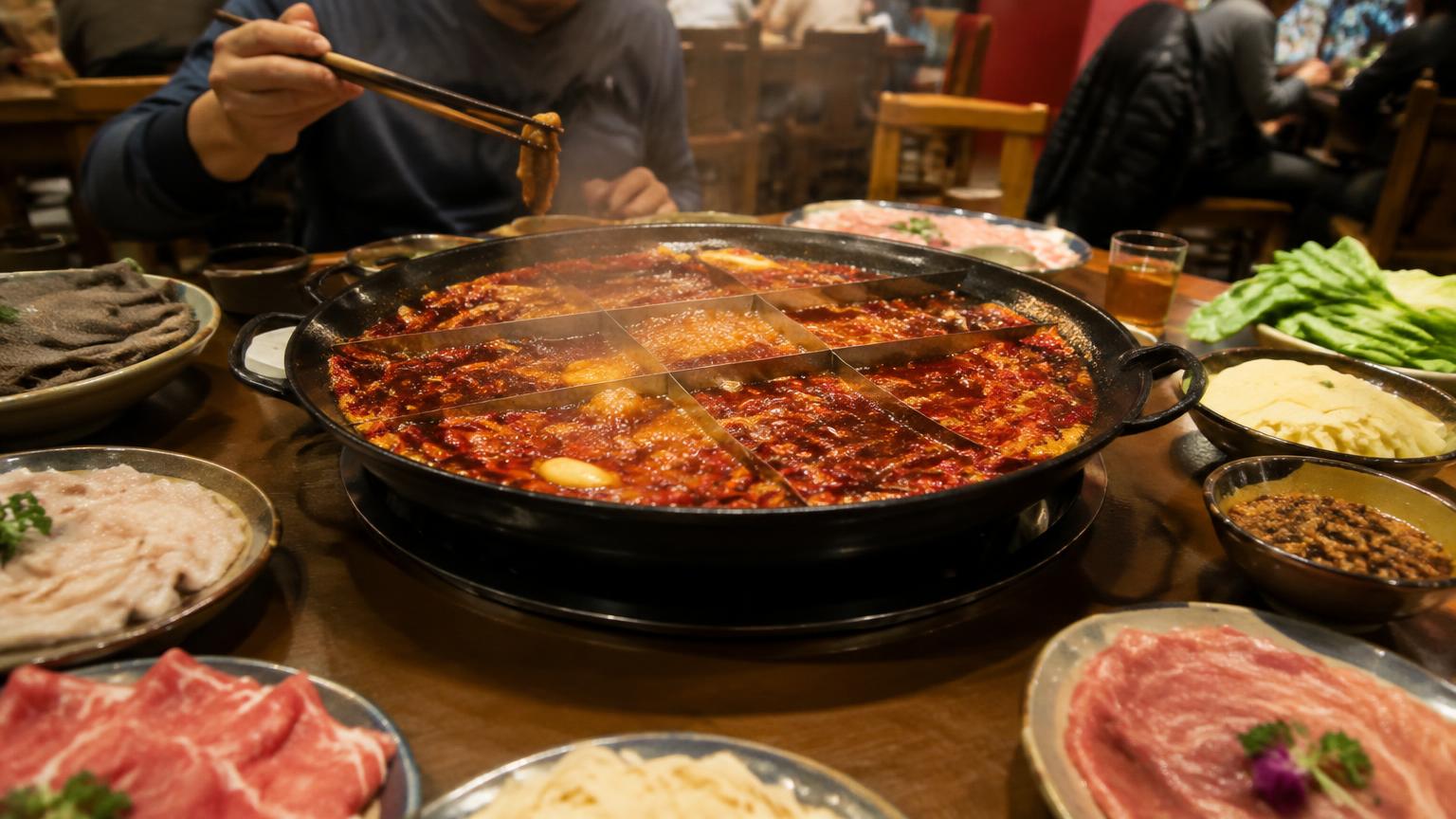
Why is hotpot so central to Chongqing identity?
Chongqing hotpot began as a riverside workers' meal, cooked in a shared pot of beef tallow, dried chili and Sichuan peppercorn so leftover cheap cuts of offal could be shared cheaply and quickly. The numbing-spicy "ma-la" flavour is not decoration, it is the whole point: it cuts through humidity, masks the smell of cheaper ingredients, and forces people to slow down, sweat and talk over a communal pot. Eating hotpot in Chongqing is less a meal than a social ritual, usually late at night, often outdoors even in summer.
Who were the bang-bang porters and why do they matter?
Because Chongqing is built on steep hills above the Yangtze and Jialing rivers, wheeled carts were long useless on many streets. "Bang-bang" porters carried goods up and down the slopes on a bamboo pole balanced over one shoulder, a job that defined the city's working-class image for decades. Fewer porters work today, but the nickname "bang-bang jun" (pole-carrying army) is still used with genuine respect for the physical toughness the city was built on.
What makes the Chongqing dialect so distinctive?
Chongqinghua belongs to the southwestern Mandarin family, closer to Sichuanese than to standard Mandarin, and it is spoken fast, loud and with blunt, punchy tones. Locals are known for calling things exactly as they see them rather than softening opinions, which outsiders sometimes read as brusque but locals experience as honest and warm once you know someone. Picking up a few local words, like "sá zi" for "what," is a quick way to make people smile.
Why are teahouses and mahjong still everywhere?
Old-style teahouses along the riverbanks and in neighbourhoods like Ciqikou remain gathering points where retirees, workers on a break and neighbours play mahjong for hours over cheap tea and sunflower seeds. Mahjong in Chongqing is less about gambling and more about a daily social rhythm, a way to keep relationships alive in a city that otherwise moves at a very fast pace.
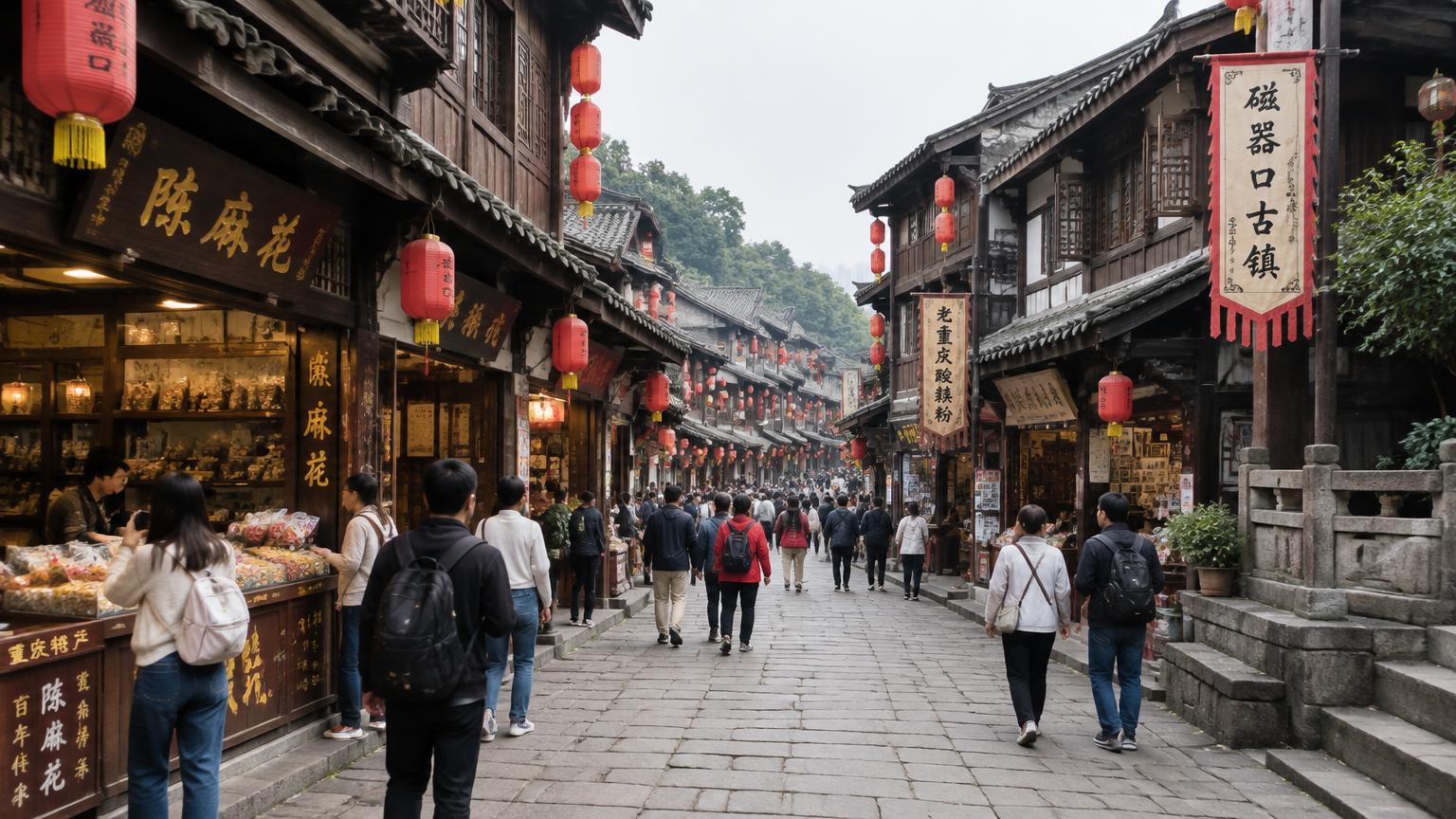
Why is Chongqing called the mountain city and fog capital?
Chongqing sits on a peninsula of steep hills wedged between two rivers, so streets climb and dive constantly, buildings stack on top of each other, and some addresses have entrances on different floors from different streets. Add the thick river-valley fog and humid haze that once earned it the nickname "fog capital," and you get a skyline that looks otherworldly at night, with light-rail lines threading straight through apartment towers.

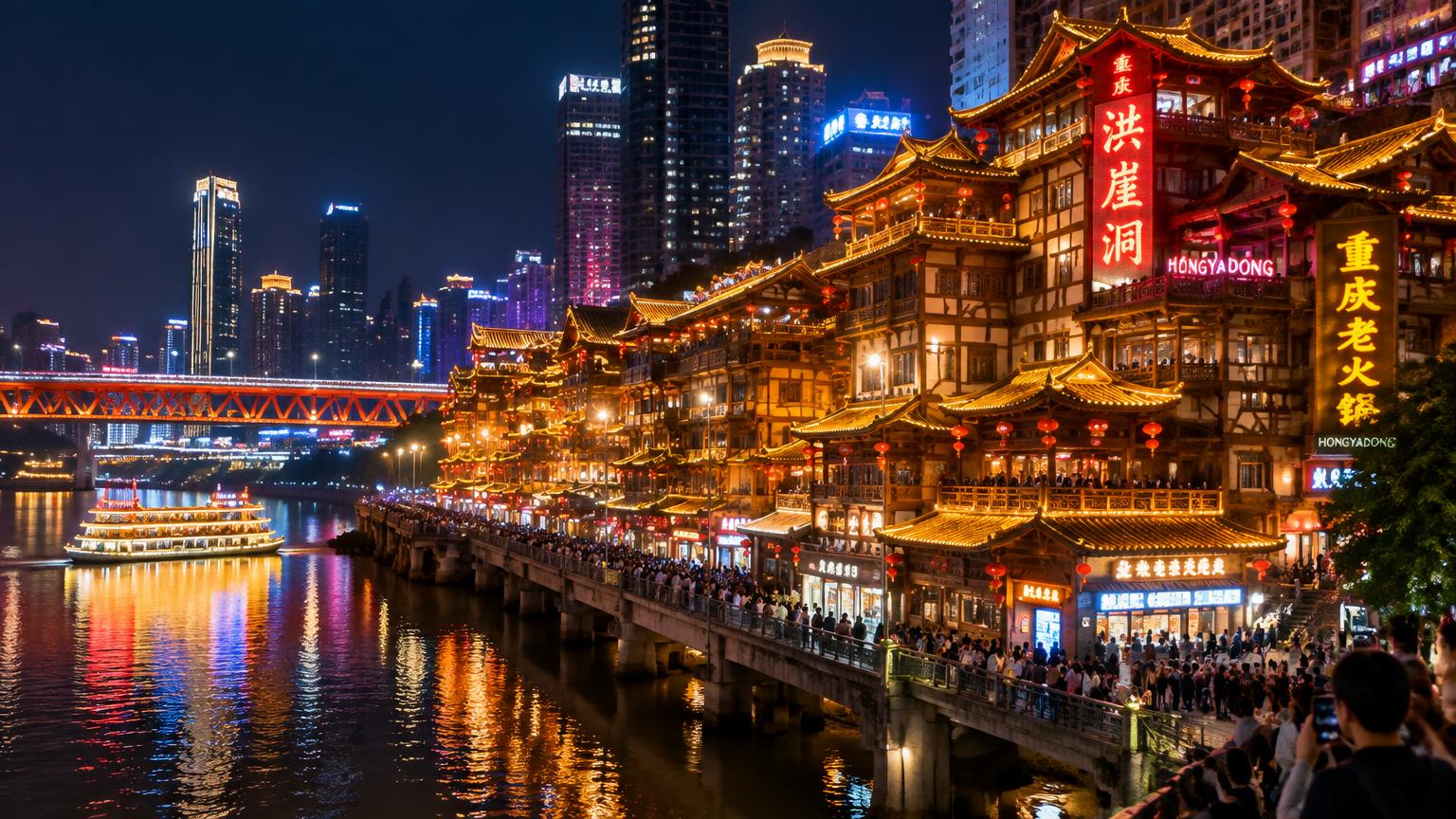
What does everyday street life look like at night?
Chongqing genuinely wakes up after dark: night markets along the riverbanks sell grilled skewers and cold noodles, hotpot restaurants fill up past midnight, and families come out to the embankments once the summer heat breaks. The Hongyadong stilt-house complex, lit up in layered golden terraces above the river, has become the city's most photographed symbol of this after-dark energy.
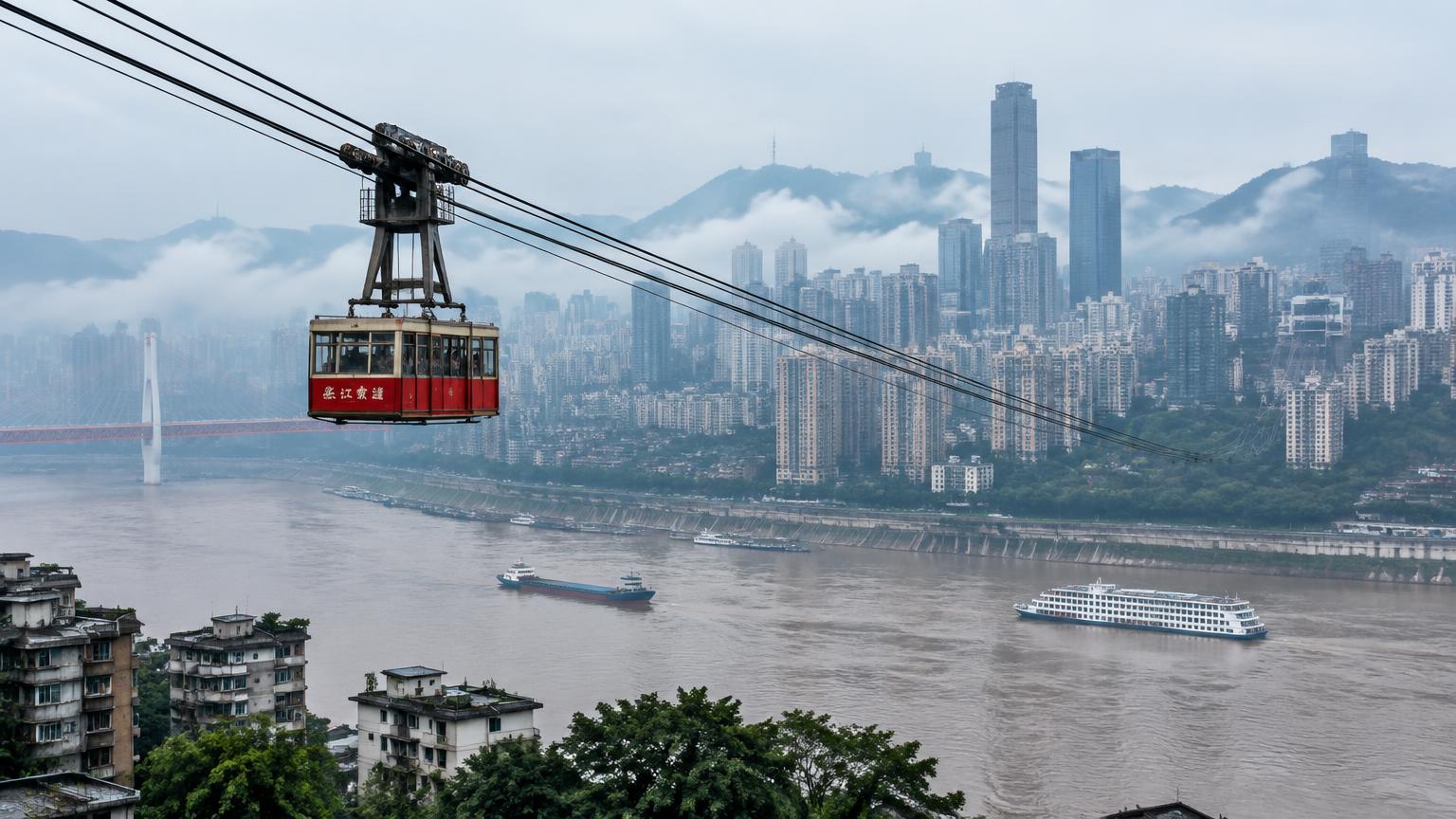
How does the river and its topography shape local habits?
The confluence of the Yangtze and Jialing rivers at Chaotianmen has always been the city's commercial heart, and the cable cars that once carried commuters across the water, like the Yangtze River Cableway, are now kept running partly as heritage rides. Living with two rivers and constant elevation change has made Chongqing people unusually comfortable with stairs, funiculars and steep walks that would exhaust visitors from flatter cities.
What festivals and folk arts define the region?
Sichuan opera, with its fast face-changing (bianlian) technique, fire-spitting performances and percussion-heavy music, has deep roots in the wider Sichuan-Chongqing cultural basin and is still staged in theatres and teahouses around the city. Lunar New Year, the Lantern Festival and the Dragon Boat Festival are marked with riverside crowds, lion dances and food stalls, while smaller neighbourhood temple fairs keep older folk traditions alive year-round.
How do locals treat guests and visitors?
Hospitality in Chongqing tends to be generous but unfussy: hosts will insist on paying for a meal, pile your bowl with food, and speak plainly rather than with elaborate formality. Staying in an ordinary residential neighbourhood such as Jiangbei's Beibin Road, where House of Pearl is located, shows this daily rhythm far more directly than a downtown hotel district, from morning market stalls to evening mahjong games on the corner.

What etiquette should visitors keep in mind?
When eating hotpot, it is polite to let elders or hosts choose the broth split and to avoid double-dipping your chopsticks into the shared pot after they have touched your bowl. On public transport and in busy streets, expect close physical proximity and fast-moving crowds, which is normal local behaviour rather than rudeness. A simple thank-you in the local dialect, and a willingness to try spicy food without complaint, goes a long way with hosts.
Is Chongqing food always extremely spicy?
Most signature dishes, especially hotpot and xiaomian noodles, use ma-la chili-and-peppercorn seasoning, but mild broths and milder dishes are widely available, and restaurants will usually adjust spice levels on request.
Do people in Chongqing speak Mandarin or Sichuanese?
Most residents speak Chongqinghua, a southwestern Mandarin dialect close to Sichuanese, in daily life, but standard Mandarin is understood and spoken everywhere, including by younger people and in official settings.
Is Chongqing actually foggy most of the year?
The nickname "fog capital" reflects its historic river-valley haze, but modern Chongqing has clearer skies than in past decades, with fog now more common in autumn and winter mornings than year-round.
What should I try besides hotpot?
Xiaomian noodles, spicy dan dan noodles, grilled skewers from night markets, and river fish dishes are all central to local food culture and easier for a quick meal than a full hotpot session.
Why does staying in a real neighbourhood matter for understanding the city?
Chongqing's culture lives in its streets, staircases and teahouses more than in any single monument, so the best way to feel it is to walk the hills, eat where locals eat, and stay somewhere with an actual neighbourhood around you rather than only visiting landmark districts.